Fusion Energy Events at COP28
Fusion energy is strongly represented at the 2023 United Nations Climate Change Conference in Dubai

Fusion energy is strongly represented at the 2023 United Nations Climate Change Conference in Dubai
The five US NRC Commissioners announced in a vote that fusion energy would be regulated under the same regime as particle accelerators.
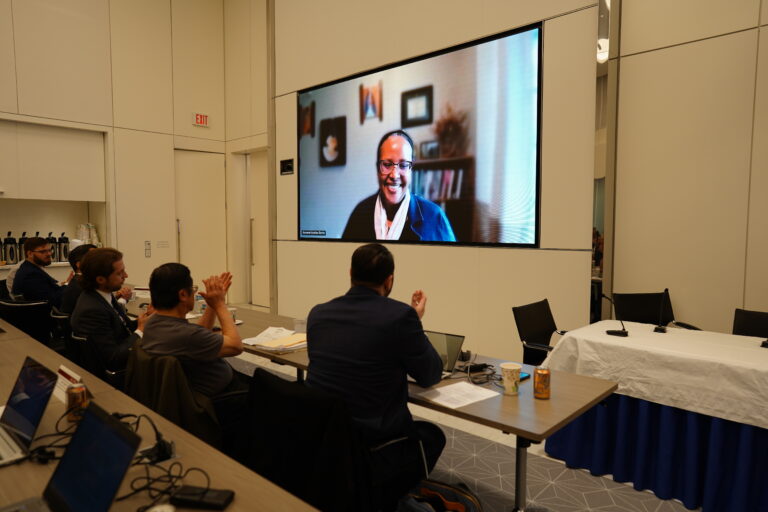
The Fusion Industry Association (FIA) hosted our second annual conference on March 29, 2023 in Washington, DC.
The U.S. Government Accountability Office released a technology assessment report on fusion energy, GAO-23-105813, on March 30, 2023.

The Fusion Industry Association signed a letter in December 2022 in support of funding the Department of Energy’s Office of Science.
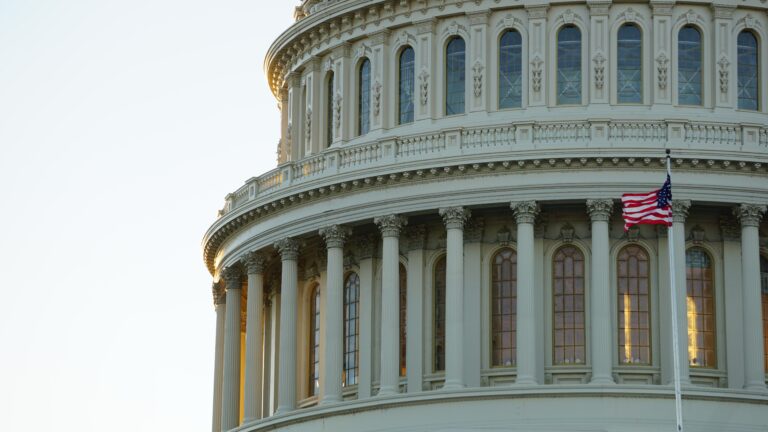
On Monday, January 23, Representative Lofgren and Senator Padilla wrote a letter to President Biden in support of funding fusion energy.
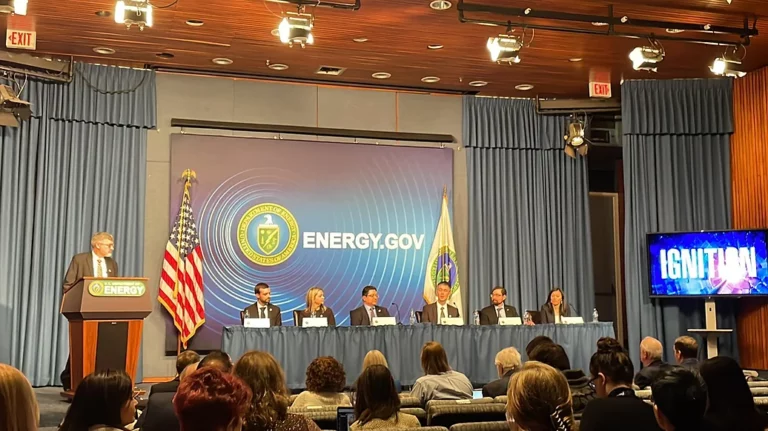
The Fusion Industry Association (FIA) today released a statement applauding the recent breakthrough at the National Ignition Facility (NIF).
The Special Competitive Studies Project (SCSP) published an Interim Panel Report, Harnessing the New Geometry of Innovation, laying out actions for the U.S. to strategically position itself as a long-term leader of fusion energy acceleration and commercialization. The report is the fourth interim panel report using the work collected by the SCSP over the past…
Fusion energy was represented at the 2022 United Nations Climate Change Conference in Sharm El-Sheikh.

FIA Members and Others Receive DOE Funding from Fusion Public-Private Partnership Awards of 2021 INFUSE Grants Totaling at $2.1 Million.