Japan-based Helical Fusion picks construction partner for its pilot machine
Helical Fusion and Japanese construction company Hazama Ando announced a partnership to support the development of Helical Fusion’s pilot plant targeted for the 2030s.
Germany-based Proxima Fusion has raised €411 million to advance plans for its first commercial fusion power plant. The funding will support the company’s technology development and manufacturing as it targets demonstration in the early 2030s.
On April 3, President Trump released the Presidential Budget Request (PBR) for Fiscal Year 2027. Within this, the request for the Fusion Energy Sciences (FES) program of $755.25 million is $50 million less than the $805.65 million appropriated for Fiscal Year 2026.
A one-time $10 billion injection of U.S. public capital into efforts and partnerships with the private fusion industry would accelerate the path toward commercialization…but how exactly should this $10 billion be allocated? In a new one-pager, the FIA breaks down exactly how this allotment should be used.
DW considers Germany’s fusion energy future under the government’s recently-released High Tech Agenda.
The Energy Subcommittee of the House Committee on Science, Space, and Technology held a hearing on September 18 on “Igniting America’s Energy Future: The Promise and Progress of Fusion Power.” Commonwealth Fusion Systems’ CEO Bob Mumgaard and Pacific Fusion CEO Will Regan – both members of the FIA – testified, as well as Dr. Stephanie Diem, Assistant Professor at the University of Wisconsin–Madison and Dr. Troy Carter, Director of the Fusion Energy Division at Oak Ridge National Laboratory.
U.S. Energy Secretary Chris Wright says commercial fusion electricity should be on the grid within the 2030s.
On July 30, Germany’s Federal Ministry of Education and Research unveiled the “Hightech Agenda Deutschland,” a national innovation strategy that identifies fusion as one of six technologies critical to the country’s future. By making fusion a strategic priority and integrating it into its broader industrial and energy policy, Germany is reinforcing its commitment to lead in fusion globally.
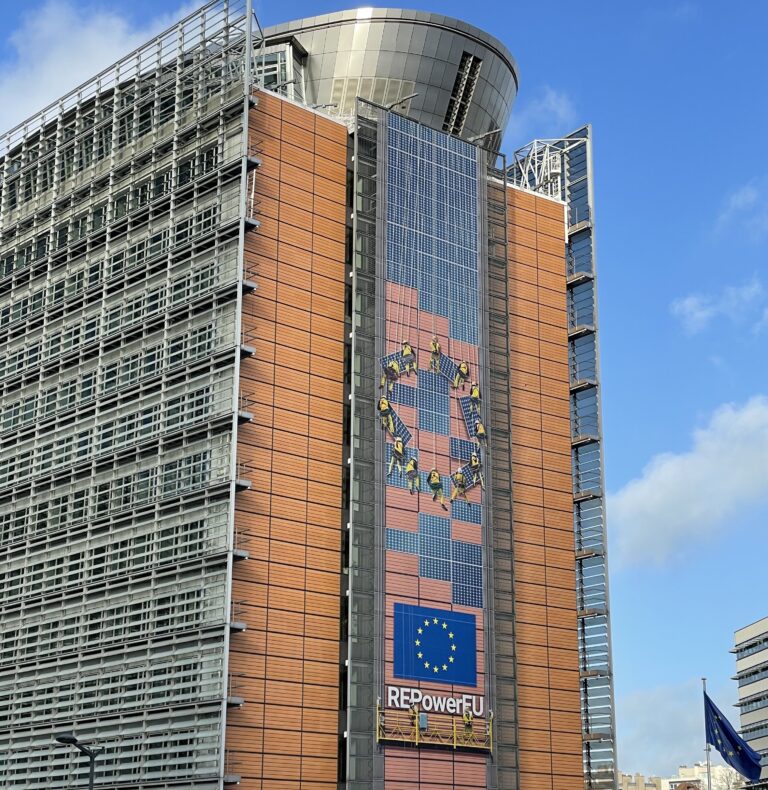
In the midst of a global race to deployment, the Fusion Industry Association (FIA) has launched three position papers to help shape EU policy and accelerate the path to commercial fusion energy. The papers provide recommendations regarding European public-private partnerships, regulations, and funding.
UK can lead £31 trillion Global Fusion Industry, but government needs to act now to attract fusion companies, says Fusion Industry Association.
Magnetic confinement: Plasma is heated to 100 million °C or more, then squeezed and held in place by strong magnetic fields, allowing many fusion reactions to occur. (Example: tokamaks, stellarators)
Inertial confinement: Tiny fuel pellets are struck by powerful lasers. The outer layer explodes outward, compressing the core to fusion conditions for a few nanoseconds, producing a brief but intense pulse of energy from each pellet. (Example: National Ignition Facility)
Hybrid systems: Combine compression (e.g., from lasers, plasma pistons, or mechanical impact) with moderate magnetic fields to reduce energy losses and improve confinement.
Electrostatic fusion: Uses high electric potentials to accelerate ions toward a central reaction zone, causing them to collide at high energies and fuse. The ions are guided and confined by electric fields rather than magnets, creating a compact environment for fusion reactions.