US fusion energy dreams edge closer to reality, Congress permitting
To say 2023 was a big year in the world of fusion research would be an understatement.


To say 2023 was a big year in the world of fusion research would be an understatement.

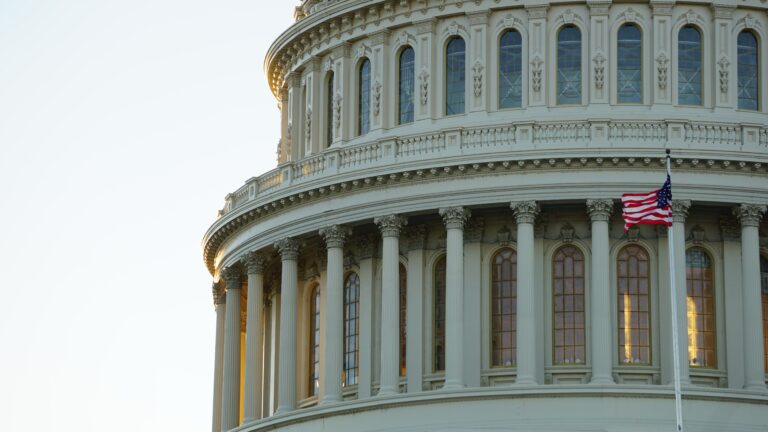
A major bipartisan bill that seeks to create a regulatory framework for commercial fusion energy and bolster funding for research successfully passed the Republican-dominated House Energy Committee on Tuesday.

75 US-based companies and universities sent a letter to the Senate and House Appropriations Committees, urging an increase in fusion energy funding. The community requests that fusion is funding at the level requested by the President’s budget request, at the full level authorized in the CHIPS and Science Act. The whole community agrees that the Committee should “fund and prioritize” fusion energy

A bipartisan letter signed by 72 Members of Congress, requesting increased funding into the commercialization of fusion energy, was sent to the House Appropriations Committee on October 31.
The Congressional Appropriations Committees in both the House and Senate, which write the bills that will fund the government, have passed their proposed funding bills for fusion energy research in the Energy and Water Appropriations bills, cutting the fusion budget significantly from the President’s request of $1.01 billion. In March, the President’s request to Congress…
On June 30, Senator Maria Cantwell, Chair of the Senate Committee on Commerce, Science, and Transportation, sent a letter to Secretary Gina Raimondo, US Department of Commerce, on the importance of power semiconductors being included in the CHIPS for America Fund, based on the need for the growing fusion industry.

On June 13, alongside representatives from the U.S. Department of Energy, Helion Energy, US ITER Project Office, and General Atomics, FIA CEO Andrew Holland testified at a Congressional hearing on “From Theory to Reality: The Limitless Potential of Fusion Energy“, hosted by the Energy Subcommittee of the House Committee on Science, Space, and Technology. A main theme from the hearing: the general consensus to increase support for accelerated fusion commercialization, a feat that will unlock “limitless potential” for energy, climate, and economic benefits.

On June 13 at 2pm, FIA CEO Andrew Holland will testify at a Congressional hearing on “From Theory to Reality: The Limitless Potential of Fusion Energy”, hosted by the Energy Subcommittee of the House Committee on Science, Space, and Technology.
The US Department of Energy will announce the first round of awardees of the Milestone-Based Fusion Development Program on Wednesday, May 31 at 2pm ET via live-stream (embedded video below).
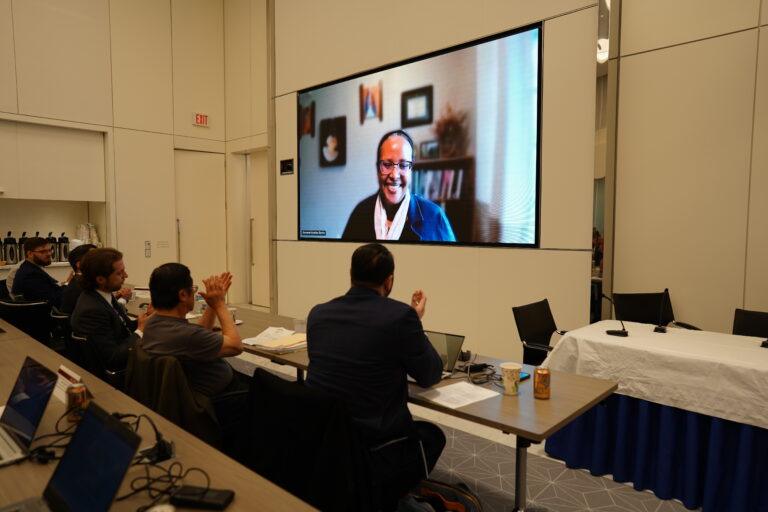
The Fusion Industry Association (FIA) hosted our second annual conference on March 29, 2023 in Washington, DC.
Magnetic confinement: Plasma is heated to 100 million °C or more, then squeezed and held in place by strong magnetic fields, allowing many fusion reactions to occur. (Example: tokamaks, stellarators)
Inertial confinement: Tiny fuel pellets are struck by powerful lasers. The outer layer explodes outward, compressing the core to fusion conditions for a few nanoseconds, producing a brief but intense pulse of energy from each pellet. (Example: National Ignition Facility)
Hybrid systems: Combine compression (e.g., from lasers, plasma pistons, or mechanical impact) with moderate magnetic fields to reduce energy losses and improve confinement.
Electrostatic fusion: Uses high electric potentials to accelerate ions toward a central reaction zone, causing them to collide at high energies and fuse. The ions are guided and confined by electric fields rather than magnets, creating a compact environment for fusion reactions.