FIA Delegation in Berlin, Germany
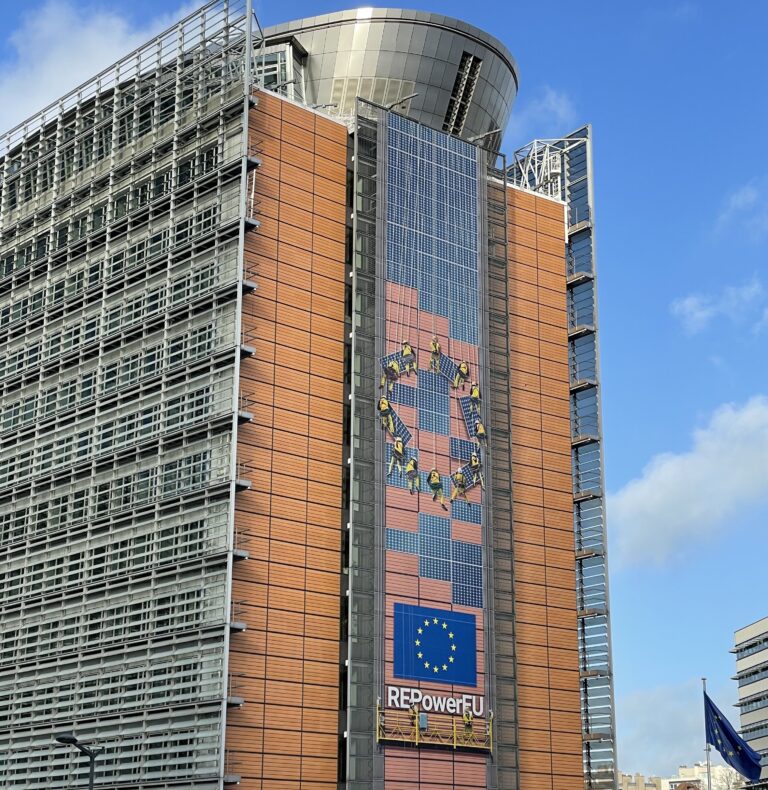
On September 18 and 19, the FIA completed a series of meetings and discussions in Berlin, Germany to highlight the opportunities for fusion energy investment and development in Germany.
Overview The Fusion Industry Association (FIA) is seeking an Executive Director for Europe to lead the FIA’s overall European operations, strategy, and organizational growth. This senior executive role offers a unique opportunity to shape the future of clean energy by driving high-level political engagement, expanding the Association’s presence, and supporting organizational growth. Working alongside our…
The FIA is seeking a dedicated and skilled Manager for Public Policy to join our team to shape FIA’s advocacy efforts, managing direct outreach to government bodies, prioritizing and organizing the membership and the Association’s leadership direct engagement with policymakers, and coordinating across the Association.
The FIA is seeking an experienced and motivated Events Coordinator to expand FIA’s already active events program and engage a rapidly growing membership.
To lead on fusion energy, the US needs to make strategic, investments. The FIA recommends a one-time supplemental appropriation of $3 billion.
Understand the importance of fusion energy’s explicit inclusion in the Inflation Reduction Act’s new tax credits. This recognition ensures fusion is treated as a distinct technology, bolstering its development as a commercial energy source.
Discover the key takeaways from the Fusion Industry Association’s May 2024 letter to the NRC, addressing critical updates in fusion energy regulation and guidance.
Report says “Promoting a faster and viable commercialisation of fusion energy will require both public and private investment” The European Commission recently published a report analyzing a strategic public-private partnership (PPP) approach to foster innovation in fusion energy titled Analysis on a strategic public-private partnership approach to foster innovation in fusion energy. There is an increasing…

The U.S. government will increase funding for fusion energy research to $790 million for the Department of Energy’s Office of Fusion Energy Sciences.
The FIA endorsed passage on February 28, 2024 of H.R.6544, the bipartisan Atomic Energy Advancement Act with the Trahan-Obernolte Fusion Energy Act included.
Magnetic confinement: Plasma is heated to 100 million °C or more, then squeezed and held in place by strong magnetic fields, allowing many fusion reactions to occur. (Example: tokamaks, stellarators)
Inertial confinement: Tiny fuel pellets are struck by powerful lasers. The outer layer explodes outward, compressing the core to fusion conditions for a few nanoseconds, producing a brief but intense pulse of energy from each pellet. (Example: National Ignition Facility)
Hybrid systems: Combine compression (e.g., from lasers, plasma pistons, or mechanical impact) with moderate magnetic fields to reduce energy losses and improve confinement.
Electrostatic fusion: Uses high electric potentials to accelerate ions toward a central reaction zone, causing them to collide at high energies and fuse. The ions are guided and confined by electric fields rather than magnets, creating a compact environment for fusion reactions.